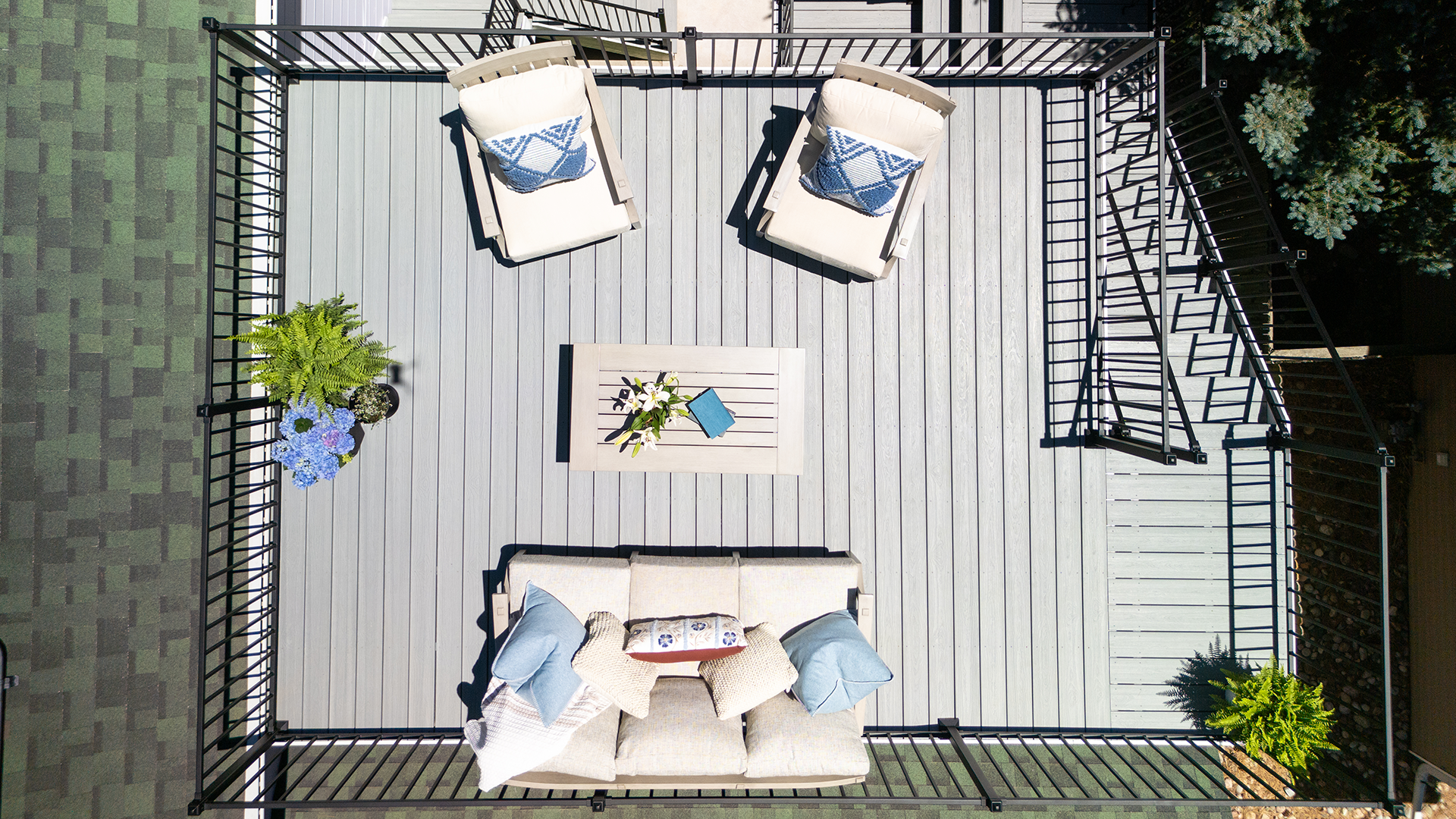
The Difference Between Capped and Uncapped Composite Decking
Every year when outdoor living season rolls around, composite decking sees a spike in popularity. These products aren’t just more durable, they also require less maintenance than traditional wood. Once you decide on using composite deck boards for your project, you need to figure out which type is the best fit.
Make the right choice for your outdoor living project by learning the differences between capped and uncapped composite decking.

What Is the Difference Between Capped and Uncapped Composite Decking?
Composite decking is manufactured using a combination of plastics and wood fibers. While there are a variety of formulas out there, the ratio of wood fibers that are mixed into the product and how the materials are blended together differs. The two main types of composite decking are capped boards and uncapped boards.
In general terms, capped composite decking has a “cap” or cover that is bonded to the core during the manufacturing process. It allows the decking to sport more intricate grain patterns while adding an extra layer of protection. Think of it as a shell that protects the core of wood fibers and the surface from fading. It’s one of the main features of composite deck boards that helps the product require less ongoing maintenance.
With traditional wood decking, you have to worry about applying sealant and stains at least once a year. Not to mention fixing any cracks, warping, splintering, or splits that become more common over time. It’s also important to know that composite deck boards are more durable than traditional wood. If you plan on using your outdoor living space for activities like hosting parties or tailgating, composite will perform under the pressure.
Comparing the Maintenance Between Capped and Uncapped Deck Boards
When it comes to ongoing maintenance, both composite decking types are similarly low maintenance. The only difference is that you’ll need to keep a closer eye on uncapped composite decking as the years go on. Without the protective cap bonded to the core, uncapped boards might need to be cleaned a bit more than their capped counterparts. No matter what type of composite decking you choose, its maintenance is far less involved than traditional wood.
With traditional wood decking, you have to worry about applying sealant and stains at least once a year. Not to mention fixing any cracks, warping, splintering, or splits that become more common over time. It’s also important to know that composite deck boards are more durable than traditional wood. If you plan on using your outdoor living space for activities like hosting parties or tailgating, composite will perform under the pressure.
When Should You Choose Capped Composite Decking?
Both capped and uncapped composite decking are good options for a wide variety of outdoor living projects. However, there are certain situations where capped boards should be considered.
For example, some deck designs like “picture framing” have more design options that you can bring to life with capped composite decking. The hidden fasteners or deck screws will often need to be placed straight in and closer together with these types of design. The extra durability of the “cap” gives you more flexibility in the amount of force being applied to install the screws.
If you want to create an intricate design with uncapped composite decking, it’s usually best to bring in a pro. An experienced contractor can help you navigate any special considerations that the deck design calls for.
Capped composite deck boards are also more durable and hold up much better against environmental stress compared to wood. The cap gives each board a higher density, which along with the core, helps make it resistant to cracking, warping, insects, and rot.
When Should You Choose Uncapped Composite Decking?
One common question customers ask us is when they should use uncapped composite decking for a project. Usually, people opt for uncapped composite decking when they want a more natural looking, wood-like finish for their deck.
Uncapped composite decking also has several advantages compared to traditional wood. It holds up better against the elements, is resistant to cracking, and require far less ongoing maintenance.
What Is the Best Type of Composite Decking?
While this is a popular question, there is no “right” answer. Once the design for your outdoor living space is set, a contractor and composite decking manufacturers like Envision can help you make the right choice on which is the best composite decking for your space. Both capped and uncapped composite decking will hold up better than traditional wood while still capturing its natural look.
To help you get a better idea of what’s possible with capped and uncapped composite deck boards, head over to our idea gallery. It’s filled with inspiration that can help narrow down what type and color composite decking is best fit for your vision.
Find the Best Composite Deck Boards at Envision Outdoor Living
Whether capped or uncapped composite decking is the best fit for your upcoming project, Envision Outdoor Living has got you covered. From setting the standard of an uncapped board with EverGrain to the rich colors found in capped decking of the Distinction Collection, our outdoor living products go with almost any style. Request a quote today and get one step closer to bringing your vision to life.