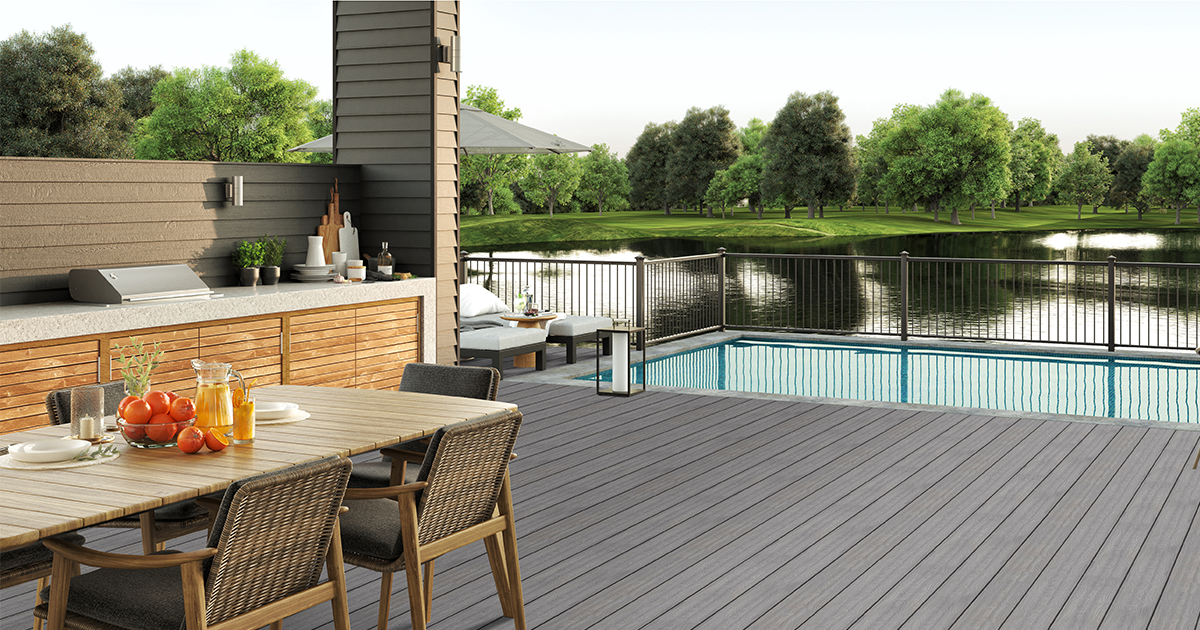
Your Complete Guide to Cable Deck Railing
For homeowners and pros, finding ways to add value to outdoor living spaces while capturing a unique style is often at the top of the to-do list. This is one of the reasons why cable deck railing has been growing in popularity over the past few years. Cable deck railing offers a slim profile and unobstructed views of the surrounding scenery.
Even though this type of deck railing infill has a wide variety of benefits, there are many aspects to consider. To help you get the most out of the product, we’ve put together a complete guide on cable deck railing.
What Is Cable Deck Railing?
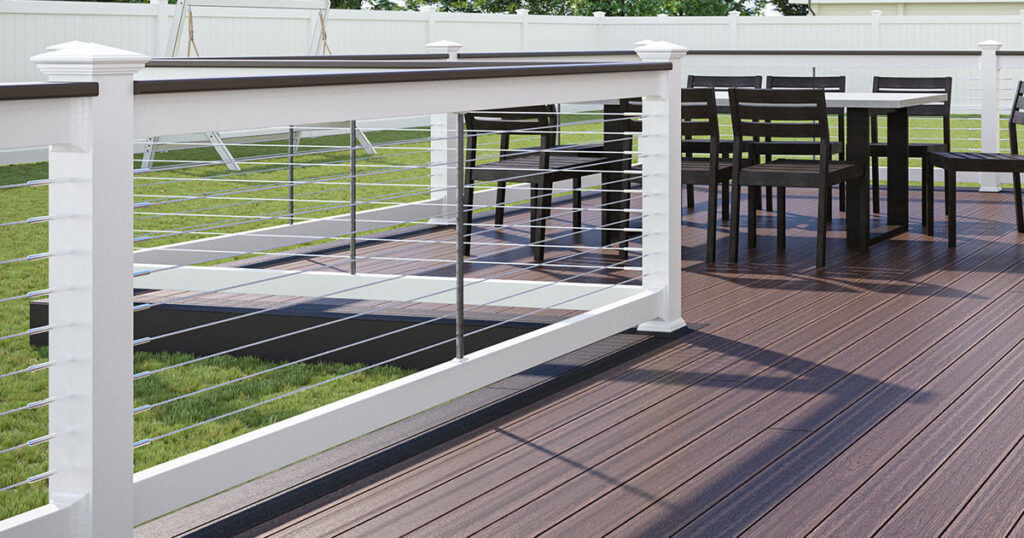
Cable deck railing is made up of posts with stainless steel cables that run between them and are tightened into place. Cables offer a clean modern aesthetic and are often paired with railing posts made of aluminum, wood, composite, or vinyl. While many traditional railings block the surrounding view, cable rail’s narrow profile and gray coloring make an outdoor living space’s beautiful scenery easier to appreciate.
The Strength of Cable Railing
Cable railing is known for its strength and is commonly required to carry a load of at least 200lbs. Under the ICC, cable railing infills need to pass a 500lb load test to meet code acceptance. If you’re considering cable railing for an outdoor living project, it’s important to check with your local residential codes. Many cities have a specific strength requirement for deck railing systems. Using cable railing may help meet these requirements—the top rail can stand up to light impacts and the cable infills are able to withstand pulling force.
How Far Apart Should Cable Railing Posts Be?
As with any railing system, it’s important to install posts the correct distance apart. Outdoor living experts agree that posts should be no further than eight feet apart with a baluster every four feet to meet the code requirement for most areas. In addition, openings between the cables themselves should not be larger than 4 inches to comply with common building codes.
It’s worth mentioning that when cable deck railing is properly installed, the system is very safe and reliable. Since the overall structure is partially dependent on the tightness of the cable infill, following the right installation process is crucial.
Tips for Installing Cable Deck Railing
The first step to proper installation of cable deck railing is to install all the posts first. Then get a detailed look at the manufacturer instructions for running the cable infill. Every cable railing system has their own unique sequence for the tightening process. As you’re looking through the instructions, pay close attention to the drawings to get an idea of where all the parts will go. These drawings will also give you an idea of the cable railing dimensions that act as a guide for the installation process.
It also helps to start by installing the corner and end railing posts first. After they’re in place, be sure to level the tops and sides of all the posts to help streamline the process. Next, install the intermediate posts. To see if all the railing posts are even, run a string across the top of all the posts. Once the posts are even, start by threading a line of cable from one end of the deck to the other. This is an opportunity to ensure that all the openings on the posts are aligned.
After each line of cable railing is installed, it’s important to add tension; keeping each cable infill line tight, helps maintain the safety and aesthetic of the space. Use a tension meter tool to help ensure that all the cables have the same tension. The manufacturer’s instruction will have guidelines on the best tension level for the railing system.
How Much Does Cable Deck Railing Cost?
On average, the cost of cable deck railing ranges from $65 to $160 per linear foot. It’s worth mentioning that some of that cost includes installation, which can take a fair amount of time since each cable line needs to be threaded through every post. Even though cable railing can be slightly more expensive than other options, its benefits make it a worthwhile investment.
The Top Benefits of Cable Deck Railing
The benefits you can expect with cable deck railing include:
- Cable railing is very versatile by nature. It can be incorporated into almost any outdoor living space design.
- Cable railing helps preserve views of the surrounding area. Plus, cables require less maintenance than other infill materials like glass.
- Cable railing systems are a great investment since they can have a positive impact on the value of the home.
Find Quality Cable Railing at Envision Outdoor Living
At Envision Outdoor Living Products, it’s our goal to help turn your deck vision into a reality. That’s why our Fairway Railing Collection has products that complement almost any style, including reliable cable infill for multiple railing systems. Request a quote for your cable railing project, and head over to the inspiration gallery to get your project started.