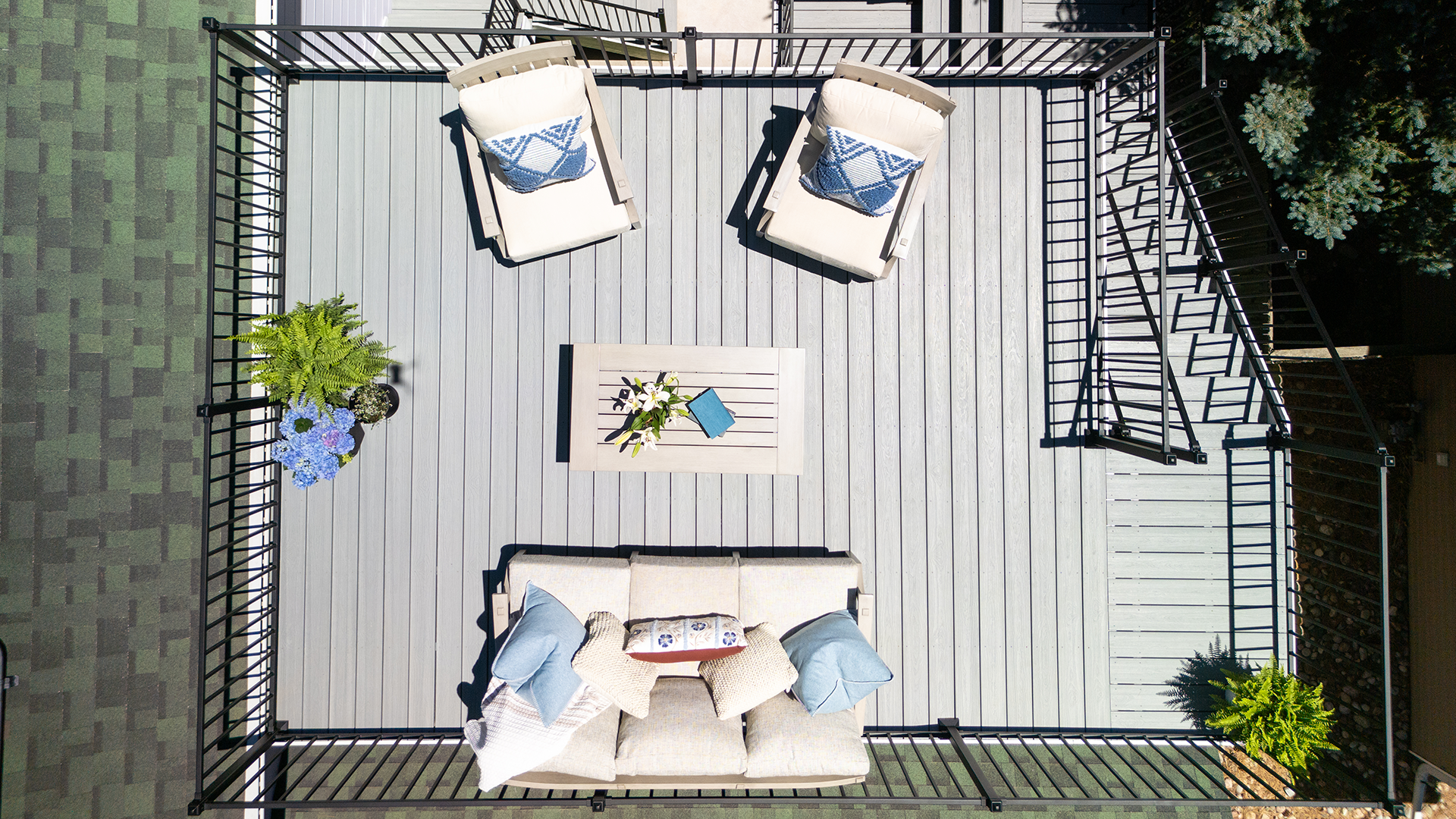
Your Composite Decking Dictionary
Whether going the DIY route or working with a contractor, it’s important to know key deck building terms so you can understand and communicate your needs, and make your project a success.
The Anatomy of a Deck: Terms to Know
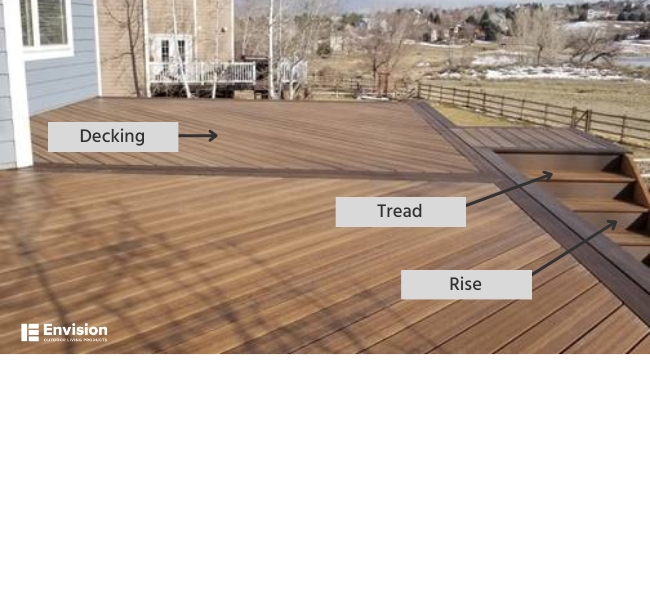
Decking:
The actual deck boards that you walk on. These can be made of a variety of materials from wood to plastic to composite.
Tread:
The tread is the top part of the stair that you step on and is often made up of two decking boards.
Rise/Run:
Rise is the vertical distance between two consecutive steps. Run is the horizontal distance of one step. Rise and run are used to determine the pitch or degree of a stairway or ramp. Total rise and total run are the vertical and horizontal distances over the entire span of a stairway or ramp.
Joists:
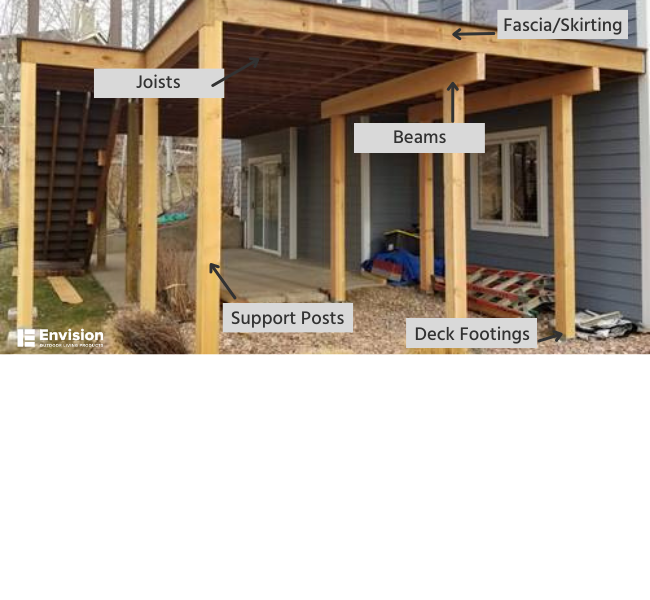
Joists are the structural boards that run under and perpendicular to the decking as part of the deck’s frame. They distribute the decking weight over the deck beams. There are also “rim joists,” which make up the deck’s perimeter and tie everything together. Joists are typically made of pressure-treated lumber.
Beams:
The beams support the deck joists and decking.
Fascia/Skirting:
Fascia/Skirting are trim boards that run horizontally to cover the ends of the joist boards.
Support Posts:
Support posts are the vertical support frames for beams.
Deck Footings:
Deck footings are the foundation of your deck that anchor it to the ground so it can handle the load on top and remain securely in place.
Structural Rail Post:
A structural post is mounted to the walking surface in lieu of using a wood 4×4 or 6×6 so that a vinyl, composite, or aluminum sleeve can be slid overtop to finish.
Rail Post Wrap:
A multi-piece system that wraps around a rail post exterior to provide a finished, low-maintenance exterior cladding.
Rail Post:
Rail posts are the vertical posts into which top and bottom rails, and horizontal or solid infills connect to. They are typically spaced every 6, 8, or 10 feet
Top Rail:
Just like it sounds, the top rail is the horizontal top railing that extends between rail posts. There are a number of top rail profiles from flat to arched. You can even use a deck board on top to serve as a drink rail.
Bottom Rail:
The bottom rail is the lower horizontal rail piece that extends between vertical rail posts and can help support vertical balusters or certain infills. However, not all railing styles include a bottom rail, so check which look you prefer.
Baluster:
Balusters are the repeating horizontal or vertical pillars or rods that sit in between vertical rail posts and can provide additional railing support and safety. Baluster materials may include aluminum, composite, and vinyl, and you can often find in square or round profiles, such as those in our Fairway Railing Collection.
Infill:
Infill is the material used to fill the railing space between horizontal top and bottom rails and vertical posts. Infill examples include balusters, mesh panel, horizontal balusters, cable, and glass.

Composite Rail:
Composite rail is made when wood fiber, plastics, color pigments, UV inhibitors, and preservatives are heated, mixed, and extruded into railing profiles.
Guardrail:
A building component or system of building components located at or near the open sides of elevated walking surfaces that minimizes the possibility of a fall from the walking surface to a lower level.
Handrail:
A horizontal or sloping rail intended for grasping by the hand for guidance and support.
Now that you know these deck building terms, are you ready to see how all these materials come together? Check out our idea gallery or deck visualizer tool for inspiration and to explore styles.